

Finding the right take care reply can make a simple goodbye feel more personal and thoughtful. Whether you are talking with a close friend, coworker, family member, or someone you just met, your response should match the mood and relationship. A warm response to take care can show appreciation, kindness, or genuine concern without sounding forced. In casual chats, a simple “You too!” may be enough. In professional settings, a polite reply to take care can keep the conversation respectful. You can also choose a sweet, funny, or caring answer when the situation feels more personal. This guide explores natural take care responses, useful take care alternatives, and easy replies for different everyday conversations.
What Does “Take Care” Mean in a Conversation?
“Take care” usually shows concern for someone’s well-being. It can also work as a simple farewell when a conversation ends. In everyday communication, the phrase may sound casual, caring, or slightly personal depending on who says it.
The meaning changes with the context. A friend may say it warmly before leaving, while a coworker may use it as a professional goodbye. Therefore, understanding the situation helps you choose a natural take care response.
What Is the Best Response to “Take Care”?
The best response to take care depends on the person and situation. “You too!” is short and natural, while “I will, thanks!” shows more appreciation. Both can work well because they return the positive feeling without making the conversation awkward.
For a casual reply to take care, try “Thanks, you too!” In a formal situation, “Thank you, you take care as well” sounds more polished. The goal is simple: match your answer with the speaker’s tone.
25 Best Responses to “Take Care” With Examples
The best take care reply in English does not need complicated wording. Short phrases often sound more natural because they fit ordinary conversation. The following examples cover friends, relatives, coworkers, acquaintances, and other everyday situations.
Each reply to take care has a slightly different feeling. Some show appreciation, while others offer reassurance or encourage future contact. Choosing the right phrase can make a simple conversation ending feel more genuine.
1. You Too!
“You too!” is perhaps the easiest you too response when someone says “Take care.” It feels friendly, relaxed, and natural. For example, someone might say, “I’ll see you tomorrow. Take care!” A simple answer is, “You too!”
2. Thanks, You Too!
“Thanks, you too” adds appreciation without becoming formal. It works especially well in casual conversation, workplace chats, and everyday encounters. For example, after someone says, “Take care on your way home,” you can answer, “Thanks, you too!”
3. I Will, Thanks!
“I will, thanks” acknowledges genuine concern. It works when someone gives advice rather than simply ending a conversation. For example, a friend might say, “Get some rest and take care.” A natural answer is, “I will, thanks!”
4. You Take Care Too
“You take care too” creates a warmer caring response. It returns the concern instead of simply repeating a goodbye. This phrase works well with friends or family members. It can also add a personal touch to an ordinary conversation.
5. Stay Safe!
“Stay safe!” is a useful stay safe response when travel, driving, weather, or another concern is involved. If someone says, “Take care while driving home,” answering “Stay safe!” keeps the message brief while showing genuine concern.
6. Thanks, I Appreciate It
“Thanks, I appreciate it” is a thoughtful polite response to take care. It works when someone has shown real concern. For example, after “Please take care of yourself,” you might say, “Thanks, I appreciate it.” The answer feels sincere and respectful.
7. You Stay Safe Too!
“You stay safe too!” combines warmth with reassurance. It works especially well when both people are leaving. In social interaction, the phrase can feel natural after a friend says, “Take care tonight.” The answer returns the same concern.
8. Take Care of Yourself Too
“Take care of yourself too” is a meaningful take care of yourself response. It fits conversations involving emotional support or genuine concern. For example, someone may say, “Please take care of yourself.” A caring answer is, “I will. Take care of yourself too.”
9. I’ll Do My Best!
“I’ll do my best!” adds an upbeat feeling to a supportive response. It can work when someone reminds you to rest or slow down. For example, “Don’t work all night. Take care.” A playful answer could be, “I’ll do my best!”
10. Always!
“Always!” is short but expressive. It usually works best with someone you know well. A close friend might say, “Take care of yourself,” and you could answer, “Always!” The phrase creates a feeling of personal connection without needing extra words.
11. Thanks, Same to You
“Thanks, same to you” is a neutral take care alternative. It suits acquaintances, coworkers, and people you know casually. The wording is respectful without sounding stiff. It can also work when you want a quick and uncomplicated farewell.
12. I’ll Try!
“I’ll try!” can make a conversation lighter. It suits close friends when someone jokingly reminds you to rest or slow down. For example, “Take care and get some sleep!” could receive the playful answer, “I’ll try!”
13. Don’t Worry, I Will
“Don’t worry, I will” offers reassurance when someone sounds genuinely concerned. It works better than a simple “You too” when the person is worried. This meaningful response acknowledges their feelings while showing that you heard their message.
14. You Better Take Care Too!
“You better take care too!” has a playful edge. It works with people who understand your humor. With friends or close relatives, it can sound affectionate. However, this phrase may feel too informal in professional communication or serious conversations.
15. Until Next Time!
“Until next time” works when another conversation or meeting is expected. It changes an ordinary take care goodbye into a positive closing. For example, after a pleasant conversation, “Take care!” can receive the cheerful answer, “You too. Until next time!”
Friendly and Casual Responses to “Take Care”
For everyday situations, short answers usually work best. A casual reply to take care should feel effortless rather than rehearsed. “You too,” “Thanks, you too,” and “Have a good one” fit ordinary text messages, chats, and face-to-face conversations.
The relationship still matters. A close friend may enjoy humor, while an acquaintance may prefer simple wording. In casual conversation, natural language usually sounds better than an elaborate answer that makes a simple goodbye feel like a speech.
| Situation | Natural Response | Tone |
| Friend leaving | You too! | Casual |
| Coworker leaving | Thanks, you too! | Polite |
| Friend traveling | Stay safe! | Caring |
| Casual text | Have a good one! | Relaxed |
| Close friend | You know I will. | Warm |
Warm and Caring Responses to “Take Care”
A warm answer can carry more meaning when someone expresses genuine concern. A take care of yourself response such as “I will, thanks” shows that you heard the person. “Take care of yourself too” goes further by returning the same supportive feelings.
These phrases work well with family members, close friends, and people experiencing a difficult moment. A thoughtful reply does not need dramatic language. Simple words can communicate kindness, empathy, and emotional support when they fit the situation.
Professional Responses to “Take Care”
Workplace conversations require clear and respectful wording. A professional reply to take care might be “Thank you, you take care as well.” This works in workplace communication, emails, meetings, and conversations with coworkers or colleagues.
The main goal is balance. A professional message should feel warm without becoming overly personal. In formal communication, “Thank you, you as well” can sound cleaner than playful expressions such as “Catch you later.”
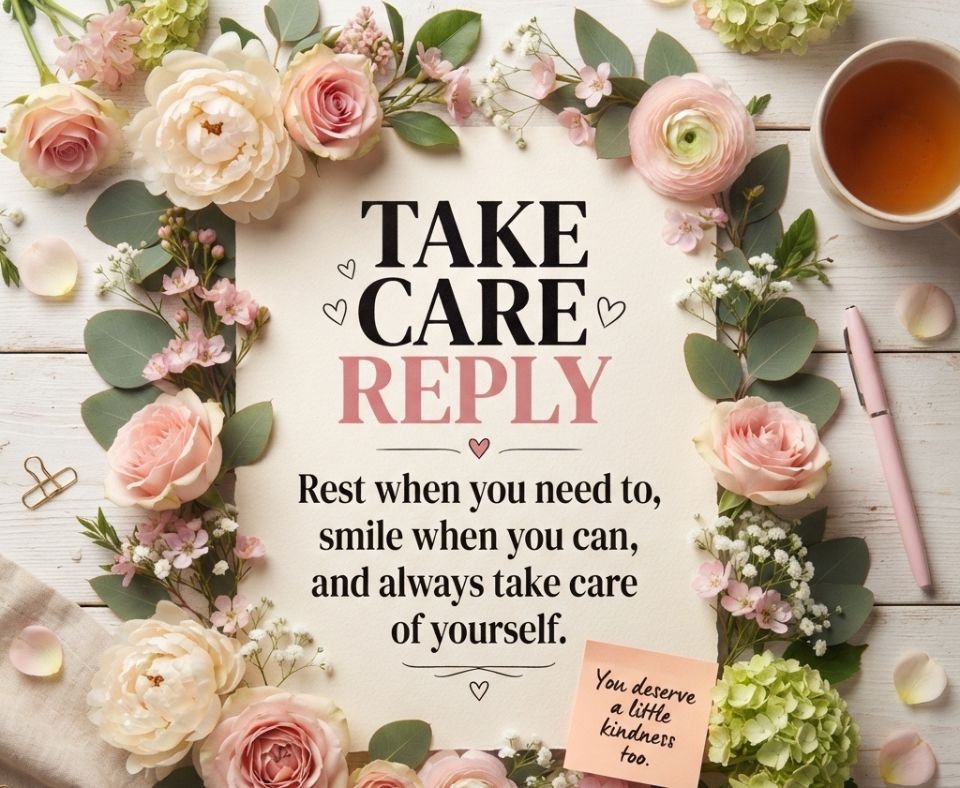
Cute, Sweet, and Playful Replies to “Take Care”
Some relationships allow more personality. Sweet ways to say take care include “You know I will,” “Take care too, my friend,” or “You better take care too!” These phrases can create a cheerful mood between close people.
However, playful wording depends heavily on relationship and context. A joke that works with a close friend may sound strange to a customer or colleague. Choose a phrase that matches the existing tone rather than forcing humor into the conversation.
How to Choose the Right “Take Care” Response
Choosing between different ways to say take care starts with the relationship. Think about who is speaking, why they said it, and how serious the moment feels. Then choose a response that sounds like something you would naturally say.
The communication channel matters too. Emails often need polished wording, while chats can stay brief. A genuine response should fit the moment, return the speaker’s kindness, and avoid making a simple conversation feel unnecessarily complicated.
| Context | Suggested Response | Why It Works |
| Everyday goodbye | You too! | Simple and natural |
| Genuine concern | I will, thanks! | Shows appreciation |
| Travel | Stay safe! | Addresses safety |
| Workplace | Thank you, you take care as well. | Professional |
| Close friendship | You know I will. | Personal |
| Playful moment | You better take care too! | Lighthearted |
FAQs
What is the best response to “Take Care”?
The most natural best response to take care is often “You too!” It is short, friendly, and suitable for many ordinary conversations. When the person shows genuine concern, “I will, thanks!” can communicate more appreciation.
How do I reply to “Take care” professionally?
A professional reply to take care can be “Thank you, you take care as well.” This works in workplace communication, emails, and conversations with clients or colleagues. It remains courteous without sounding overly formal.
What can I say instead of “Take Care”?
A useful take care synonym can be “Stay safe,” “Have a great day,” “Have a good one,” or “See you soon.” These take care alternatives let you adjust the farewell according to the situation and relationship.
Conclusion
A good take care reply should match the moment rather than follow a rigid formula. Short phrases can work beautifully during ordinary goodbyes, while warmer wording can show empathy, kindness, and genuine concern when the situation feels more personal.
Whether the conversation happens through text, email, or face-to-face interaction, natural wording matters. Choose a response that fits the tone, respects the relationship, and feels comfortable to say. Sometimes “You too!” is enough. Other times, a thoughtful sentence can make the farewell much more meaningful.